The Three Moisture Zones, and Which One You Live In
The United States Forest Products Laboratory publishes the Wood Handbook, general technical report FPL GTR-190, which is the reference document for how wood behaves. Chapter 13, Table 13-2, gives recommended moisture content values for wood products at the time of installation, split into three geographic zones.
| Area | Average | Individual pieces | What it means |
|---|---|---|---|
| Most areas of the United States | 8% | 6% to 10% | The default target a shop outside this region works to |
| Dry southwestern area | 6% | 4% to 9% | The arid interior. Two points below the national default |
| Damp, warm coastal areas | 11% | 8% to 13% | Five points above the dry target. Wood built here moves a lot when it arrives here |
Source: USDA Forest Service, Wood Handbook, FPL GTR-190, Chapter 13, Table 13-2.
Five percentage points separate the coastal target from the dry southwestern one. That does not sound like much until you convert it into inches across a panel, which the same chapter lets you do and which the wood species guide does species by species. For now, the useful takeaway is that a cabinet built to a coastal or national default and installed in the Antelope Valley has to lose width, and every joint in it is where that width comes out.
What the Air Here Actually Does
Lancaster's climate, recorded in the NOAA 1991 to 2020 normals at General William J. Fox Airfield, at 2,359 feet elevation:
- Average annual precipitation: 6.81 inches
- Mean daily maximum: 77.1F
- Mean daily minimum: 47.1F, roughly a 30 degree daily swing
- Record high: 115F, 30 June 2013
- Record low: 2F, 24 December 1984
For comparison, the Wood Handbook also publishes Table 13-1, equilibrium moisture content for outside conditions in a list of US cities. Lancaster is not one of the listed stations, so no Lancaster equilibrium figure is claimed here, but the listed California and southwestern stations show the shape of the difference:
| Station | Annual EMC range | What it shows |
|---|---|---|
| Los Angeles, California | 12.1% to 15.1% | Coastal basin. Narrow annual swing, consistently damp air |
| Fresno, California | 7.8% to 16.6% | Interior valley. A far wider annual swing than the coast |
| Phoenix, Arizona | 4.6% to 9.5% | Arid southwest. The lowest figures in the published table |
Source: USDA Forest Service, Wood Handbook, FPL GTR-190, Chapter 13, Table 13-1. Lancaster is not a listed station.
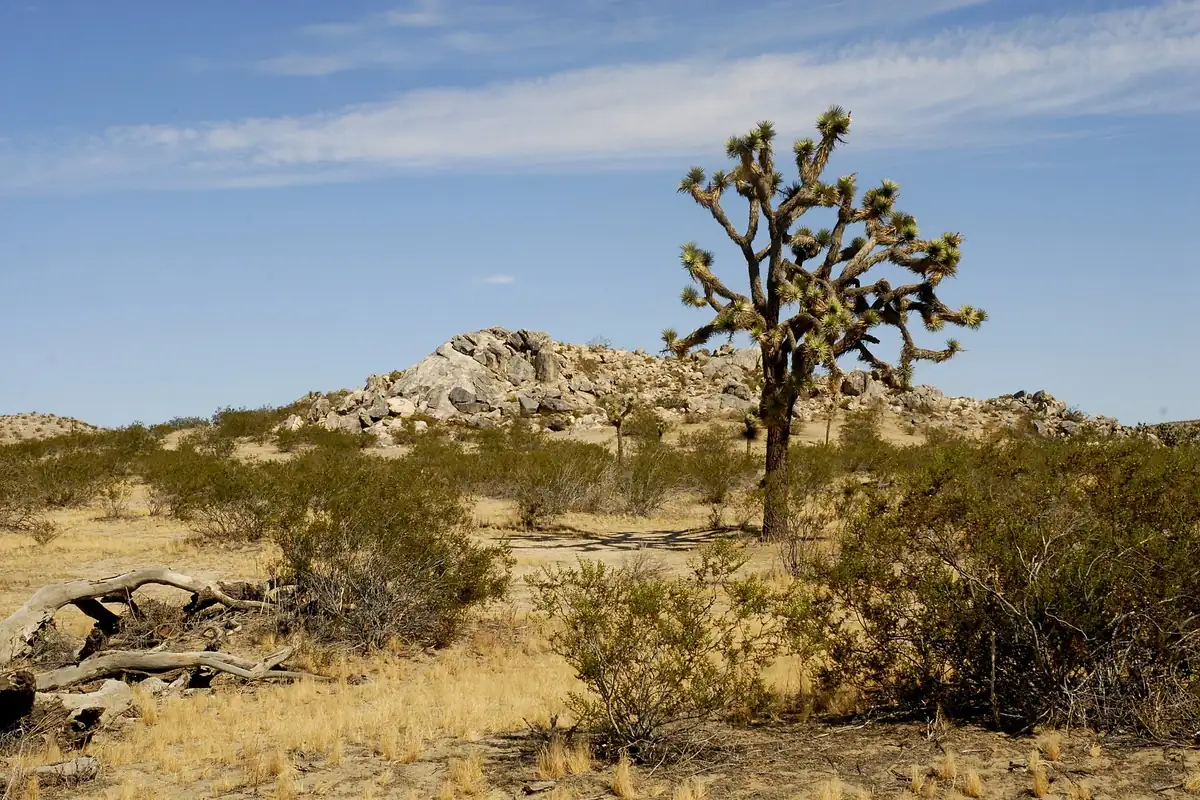
Coastal Los Angeles never drops below 12.1 percent. Interior Fresno swings nine points across a year. Arid Phoenix bottoms out at 4.6. The Antelope Valley is an arid interior basin at 2,359 feet, which is why the Handbook's dry southwestern interior target is the relevant one and the coastal one very much is not.
Box Material, Location by Location
Cabinets are not made of one material and should not be specified as though they were.
| Material | Strengths | Weaknesses | Where it belongs |
|---|---|---|---|
| Plywood | Holds screws best, survives a leak, stiff for its weight | Costs more, can have voids in cheaper grades | Sink base, laundry, anywhere a hinge plate or wall cleat carries load |
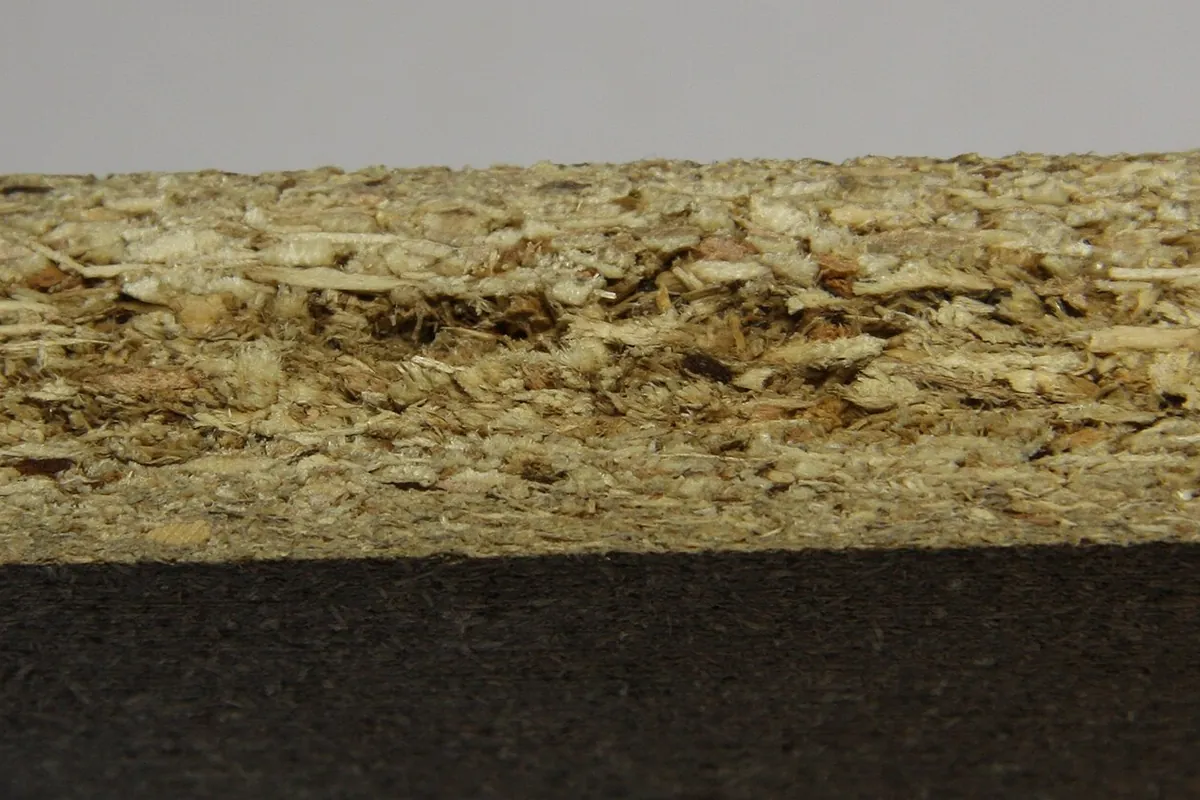
| Particleboard | Flat, stable in dry air, economical, good screw holding with the right fasteners | Destroyed permanently by water, heavier than plywood | Upper and base carcases away from water |
| MDF | Machines cleanly, takes paint better than anything else, no grain telegraph | Heavy, hates water, poor edge screw holding | Painted door cores, routed fronts, applied panels |
| Solid lumber | Strong, beautiful, repairable, sandable forever | Moves most with moisture change, most expensive | Face frames, door frames, mouldings, never wide flat panels |
The sink base is the only argument that is not an argument
Every other cabinet in a Lancaster kitchen lives in air averaging 6.81 inches of rain a year, which is as benign as sheet goods ever get. The sink base lives under a water supply, a drain and usually a dishwasher hose. Particleboard there swells, crumbles and never recovers; plywood swells slightly and returns. This is the one place to spend without debate. The same applies to a bathroom vanity and to the cabinet beside a washer in a laundry.
Construction: Why Panels Float
The single most important construction detail in a dry climate is that any panel held inside a frame must be free to move. A five piece door is two stiles and two rails around a centre panel, with the panel sitting in a groove. Left loose, the panel changes width with the season and the frame never knows. Glued in, as cheaper doors are to save an assembly step, the panel and the frame fight, and the frame loses.
Two related details follow from the same principle. The groove must be deep enough that the panel can shrink without pulling free at the edge. And the panel should be finished before assembly, so that when it does shrink, the stripe that emerges from the groove is already coated rather than raw.
Six Failures and What Causes Each
| What you see | Actual cause | What prevents it |
|---|---|---|
| Door frame joint opened at a corner | Panel glued into the frame instead of floating | Floating panel with a groove deep enough to allow movement |
| Unfinished stripe at the edge of a raised panel | Panel finished after assembly, then shrank | Finish the panel before assembly so the shrink line is coated |
| Split down the middle of a wide solid panel | A wide solid board restrained at both edges | An engineered core with a veneer face, or a narrower glued up panel |
| Hairline crack in the finish over a joint | Movement transferred into a brittle finish film | Floating construction plus a finish with some flexibility |
| Drawer bottom rattling in its groove | Thin panel that lost width in dry air | Thicker bottom, or a stable engineered panel instead of solid |
| Hinge screw spinning in the carcase | Fastener in particleboard edge rather than plywood | Plywood at hinge positions, or proper confirmat style fasteners |
Every one of these is a construction decision rather than a material defect, and every one of them is cheaper to prevent than to repair. That is the entire argument for asking about construction rather than about brand.
Finish, and the Rule That Governs It Here
Any commercial shop spraying cabinets in the Antelope Valley operates under Antelope Valley Air Quality Management District Rule 1136, Wood Products Coatings. It was adopted on 16 September 1983 and last amended on 14 June 1996. Its stated purpose is to reduce volatile organic compound emissions from the application of coatings or strippers to, and surface preparation of, any wood products, including furniture, cabinets, shutters, frames and toys.
| Coating category | Limit | Equivalent |
|---|---|---|
| Clear sealers | 275 g/L | 2.3 lb/gal |
| Clear topcoat | 275 g/L | 2.3 lb/gal |
| Pigmented primers, sealers and undercoats | 275 g/L | 2.3 lb/gal |
| Pigmented topcoats | 275 g/L | 2.3 lb/gal |
| High solid stains | 350 g/L | 2.9 lb/gal |
| Low solid stains, toners and washcoats | 120 g/L of material | 1.0 lb/gal |
| Strippers | Under 350 g/L of material | Or a composite vapour pressure of 2 mm Hg or less at 68F |
Grams per litre less water and less exempt compounds, except where stated as grams per litre of material. Source: AVAQMD Rule 1136, Wood Products Coatings.
What the rule does not do is set quality. A compliant finish can be two coats or five, so the number of coats and the sanding between them remains a real question to ask. The painted versus stained guide covers what each schedule actually involves.
Formaldehyde and the Label to Ask For
Composite wood in cabinets is regulated by two overlapping programmes with identical emission limits. TSCA Title VI, administered by the US Environmental Protection Agency, covers hardwood plywood, medium density fibreboard and particleboard, plus finished goods made from them, which explicitly includes cabinets. Since 22 March 2019 those products have had to be labelled as TSCA Title VI compliant by an EPA recognised third party certifier.
California's own Airborne Toxic Control Measure for composite wood products, run by the California Air Resources Board, has applied Phase 2 limits here since 2009. The two are aligned, so a compliant panel satisfies both.
The practical step is simple: ask to see the label on the panel stock rather than accepting a verbal assurance. Solid hardwood is not covered in the same way, for the straightforward reason that there is no added urea formaldehyde adhesive in a solid board.
Hardware in a Dry, Swinging Climate
Lancaster's roughly 30 degree average daily temperature swing means solid wood door frames move a little even when built correctly. Concealed hinges adjust in three directions specifically so a run can be trued up again after a seasonal shift, which makes adjustability a functional requirement here rather than a convenience. Decorative fixed hinges are a style choice that costs you the ability to correct. More on this on the cabinet hardware page.
What to Ask, in Order
- What moisture content was the stock dried to? The dry southwestern interior target is an average of 6 percent.
- What is the carcase material, by name, per location? Plywood at the sink base is not negotiable.
- Do door centre panels float in their grooves, or are they glued?
- Are panels finished before assembly, so a shrink line is not raw wood?
- Can I see the TSCA Title VI or CARB Phase 2 label on the composite panel stock?
- What is the finish schedule, and how many coats?
- Are hinges adjustable in three directions?
- What fasteners are used at hinge plates and wall cleats?
Sources
- USDA Forest Service, Wood Handbook FPL GTR-190, Chapter 13: Drying and Control of Moisture Content and Dimensional Changes →
Tables 13-1 and 13-2, the recommended moisture content zones, and the fabricate at service conditions principle quoted above.
- Antelope Valley AQMD Rule 1136, Wood Products Coatings (full rule text) →
Purpose and applicability, the residential noncommercial exemption, and the VOC limit tables reproduced above.
- US EPA, Formaldehyde Emission Standards for Composite Wood Products (TSCA Title VI) →
Which products are covered and the third party certified labelling requirement in force since 22 March 2019.
- California Air Resources Board, Composite Wood Products Program →
The California Airborne Toxic Control Measure that has applied Phase 2 limits since 2009.
Where to Go Next
For the same argument applied species by species, with the federal dimensional change coefficients and worked examples in inches, read the wood species guide. For what it means for door construction, see the door styles guide. For the room where all of this is most visible, see kitchen cabinets, and for the room where the temperature swing is largest, see garage cabinets.