What Refacing Actually Is
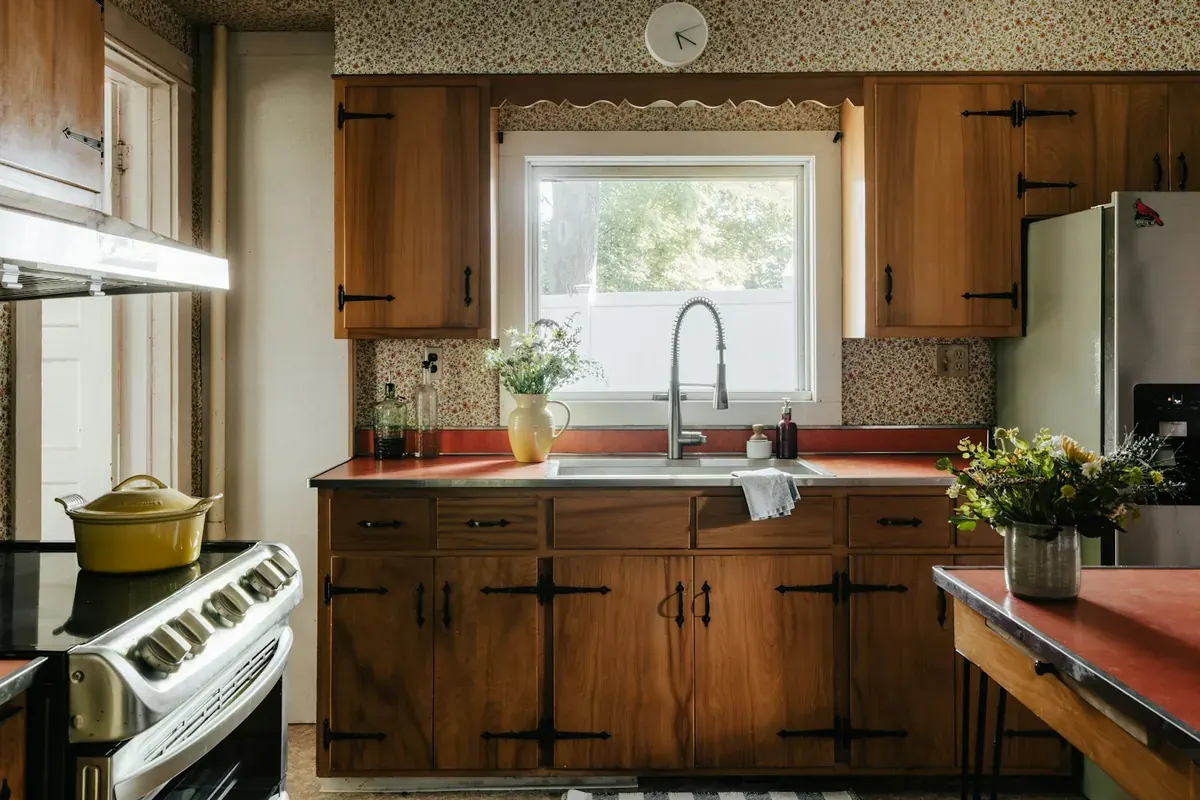
Refacing replaces every visible surface and keeps the structure. New doors and drawer fronts, new hinges and slides, new handles, and veneer or laminate skins applied over the exposed carcase ends and the face frames so the whole kitchen reads as one thing rather than as new doors on old boxes. The counters usually stay. The interiors usually stay. Nothing is demolished and nothing moves.
That last point is the whole story. Refacing is a finishing operation performed on a layout you have already decided to keep. Everything good about it and everything limiting about it follows from that single constraint.
Six Tests Your Boxes Have to Pass First
Run these before you let anybody quote. They take about twenty minutes with a tape measure and a screwdriver, and they will tell you whether refacing is a real option or a false economy.
| Test | How to run it |
|---|---|
| Square | Measure both diagonals of a base cabinet. If they differ by more than about an eighth of an inch, the box is racked and new doors will never hang evenly. |
| Dry and solid | Press the bottom of the sink base and the back corners. Any sponginess means water has been in the substrate, and a swollen particleboard bottom will not carry new doors and hardware. |
| Screw holding | Undo a hinge screw and put it back. If it spins without biting, the carcase side will not hold a new hinge plate either. |
| Face frames flat | Sight along each face frame. A bowed frame throws every reveal on that run, and a skin does not straighten it. |
| Layout worth keeping | If you would change where a cabinet is, refacing cannot do it. This is the test that eliminates most candidates. |
| Interiors you can live with | Refacing renews the outside. Shelves, drawer boxes and interior finishes stay as they are unless you pay to change them separately. |
Pass all six and refacing is genuinely the better value. Fail any of the first four and you are proposing to put new doors on a structure that is already going. Fail the fifth and you will spend real money to end up with the kitchen you currently dislike, in a nicer colour. The refacing versus replacing guide works through the decision in more depth, including the cases where it is genuinely close.
Refacing Against Replacement, Line by Line
| Refacing | Full replacement | |
|---|---|---|
| What changes | Doors, drawer fronts, exposed skins, hardware | Everything, including layout and interiors |
| What stays | Carcases, interiors, layout, usually the counters | Nothing |
| Demolition | None | Full strip out, plus disposal of the old kitchen |
| Installation labour | Much lower: nothing is hung from scratch | Full install, scribing, levelling and counters |
| Can fix the blind corner | No | Yes |
| Can add a pantry | No | Yes |
| Can recover filler strip space | No | Yes |
| Typical relative cost | A fraction of replacement | $500 to $1,500 per linear foot at LA County rates |
Replacement cost band from the published Los Angeles County range. Removal, installation and add-on figures from Thumbtack national data.
The cost difference is not a discount, it is a different scope. Refacing removes three of the largest lines from a kitchen job: demolition and disposal of the old cabinets, which Thumbtack prices at around $300; the carcases themselves, which are most of the cabinetry cost; and the bulk of the installation labour, which Thumbtack puts at roughly $70 per linear foot to remove old and install new. What remains is doors, fronts, skins, hardware and a skilled fitting day.
Getting the Doors Right Is the Whole Job
Overlay has to match
Overlay is how much of the face frame a door covers. Partial overlay leaves a visible band of frame around every door. Full overlay leaves a narrow, even reveal, typically about an eighth of an inch. Frameless has no face frame at all. A refacing job has to match the existing overlay unless you are also replacing the face frames, and that match has to be measured on your actual cabinets rather than assumed from the style.
Hinge boring has to match too
Concealed hinges sit in a bored cup on the back of the door, and both the cup diameter and its distance from the door edge have to line up with the hinge plate on the carcase. Get it wrong and the doors sit proud, sit deep or refuse to close. This is the detail that most often separates a refacing job that looks built from one that looks bolted on.
Door construction has to suit the climate
The USDA Forest Service Wood Handbook puts recommended interior moisture content at an average of 8 percent for most of the United States, 11 percent in damp warm coastal areas, and 6 percent in the dry southwestern area, with individual pieces between 4 and 9 percent. Lancaster averages 6.81 inches of rain a year at an elevation of 2,359 feet. A five piece door whose centre panel floats in its groove absorbs that seasonal movement without complaint. A panel glued into the frame has to put the movement somewhere, and it takes it out of the joint or the finish. The door styles guide sets out which styles handle this well.
What Refacing Cannot Fix
- A blind corner. The cabinet stays where it is, so the unreachable space stays unreachable.
- A missing pantry. No new cabinet is being built, so no tall storage appears.
- A filler strip. The dead space between the last cabinet and the wall stays dead.
- Doors where drawers should be. Converting a door base to drawers means a new carcase.
- Shallow or wasted cabinets over the refrigerator, because the box depth does not change.
- Sagging shelves, unless you separately replace them, which is usually worth doing while the doors are off.
- A swollen or crumbling sink base, which needs replacing regardless of what happens to the doors.
- Counters, unless you are paying to change them as a separate item.
How a Refacing Job Runs
Five stages, and the first two are decisions rather than work. Skipping them is how refacing gets its occasional bad reputation.
- 1Test the boxes before anything else
Refacing only works on carcases that are square, dry and solid. Check the diagonals of a base cabinet, press the bottom of the sink base for softness, pull on a hinge to see whether the screw is biting into plywood or crumbling particleboard, and check whether the face frames are still flat. If the boxes fail, refacing is money spent on a structure that is on its way out.
- 2Confirm the layout is one you want to keep
Refacing cannot move a cabinet an inch. If the complaint is the blind corner, the missing pantry or the filler strip, refacing will hand back the same kitchen in a different colour. This is the decision point, and it belongs before the quote rather than after it.
- 3Measure every opening and every existing hinge bore
New doors have to match the existing overlay and hinge boring or the reveals come out uneven. That means recording every opening size, the current overlay type, and the hinge cup diameter and position on the existing doors. Guesswork here is the single most common reason a refacing job looks wrong when it is finished.
- 4Make doors, fronts and matching skins
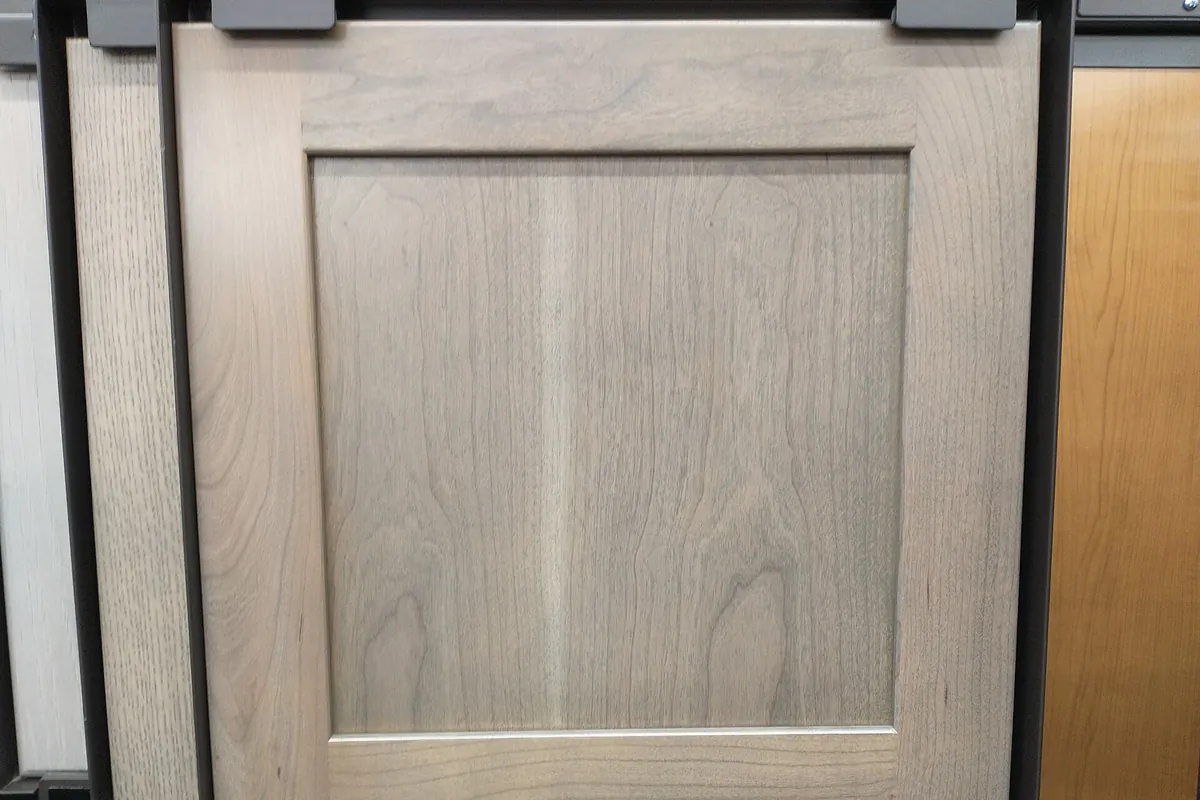
New doors and drawer fronts are built and finished in the shop, along with veneer or laminate skins for the exposed carcase ends and any exposed face frame surfaces, all in matching material and finish so the result reads as one kitchen rather than as new doors on old boxes.
- 5Strip, prepare, skin and rehang
Old doors, fronts and hardware come off. Exposed surfaces are cleaned, sanded and skinned. New hinges, slides and handles go on. Then every door and drawer is hung and adjusted until the reveals are even. Most of the labour saving over a full replacement lives in the fact that nothing is demolished and no counter comes off.
Permits and Licensing for Refacing in Lancaster, CA
Refacing needs no building permit. The California Residential Code lists cabinets and counter tops among the finish work exempt under Section R105.2, and a refacing job touches nothing structural, plumbing, gas or electrical. What still applies is the licensing and contract law: Business and Professions Code section 7048 only exempts unlicensed work below $1,000 in aggregate contract price, a home improvement contract over $500 has to be in writing and signed before work starts under section 7159, and the deposit is capped at $1,000 or 10 percent of the contract amount, whichever is less, under section 7159.5. The permit and licensing guide has the statutory wording and the links.
Where to Go Next
If only the doors need changing and the exposed ends are already fine, you may want doors and drawer fronts rather than a full reface. If the boxes failed a test, kitchen cabinets and the custom cabinets guide cover replacement properly. If you want the cost comparison in numbers, the cost guide has the published ranges. Outside Lancaster, see the service area page or just send the town and what the kitchen does badly.